

Robotic-assisted surgery is one of the newer tools available in cancer treatment today. If you’ve been told it might be an option for you, it’s natural to have questions about what it actually involves. This page explains robotic cancer surgery clearly, so you can have an informed conversation with Dr. Nishanth Sanghavi about whether it’s appropriate for your specific diagnosis.

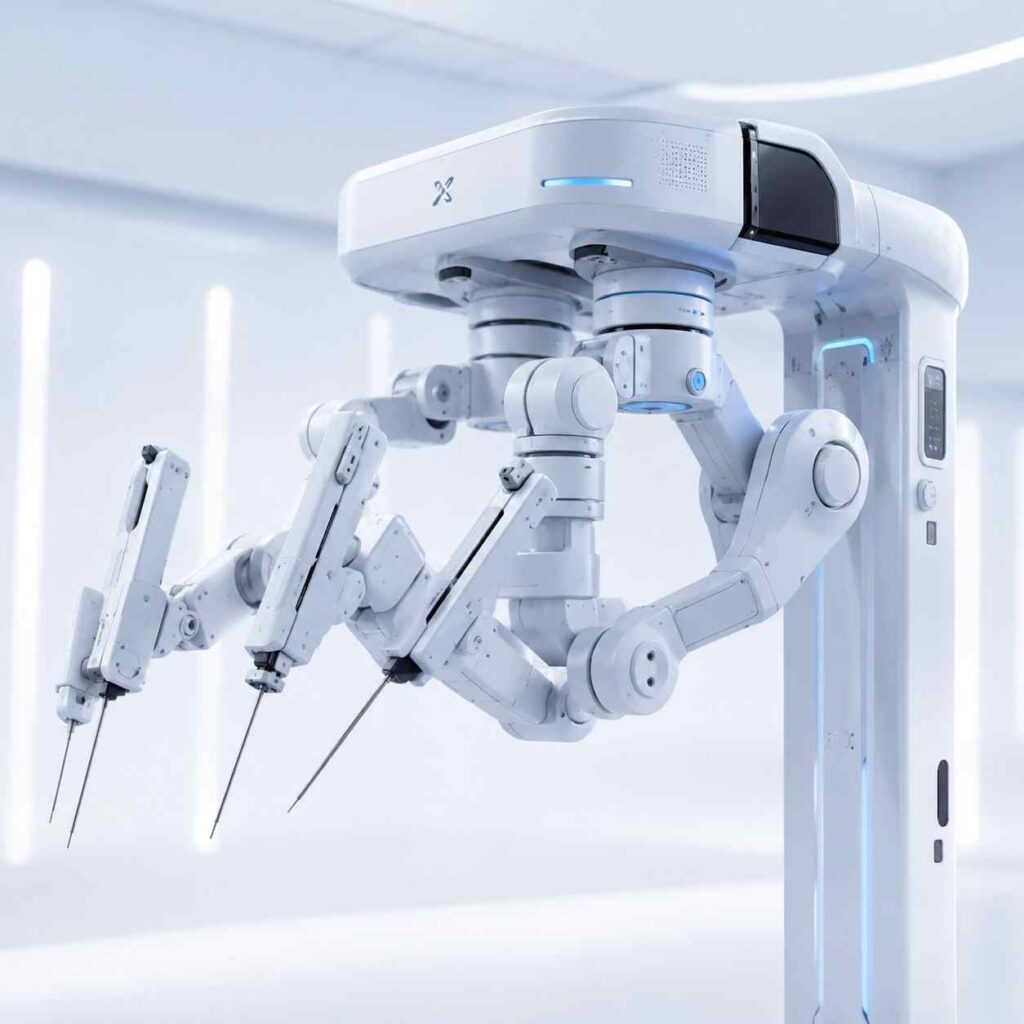
Robotic-assisted surgery is a form of minimally invasive surgery performed through small incisions, using a robotic system that the surgeon operates from a console. The surgeon remains in complete control throughout — the system does not operate independently or make decisions on its own. It translates the surgeon’s hand movements into precise, magnified, three-dimensional movements inside the body, which can be useful in certain procedures where fine control and visualisation of a small surgical area matter.

The patient is assessed through imaging, blood tests and other investigations to confirm they are fit for surgery and to plan the procedure.

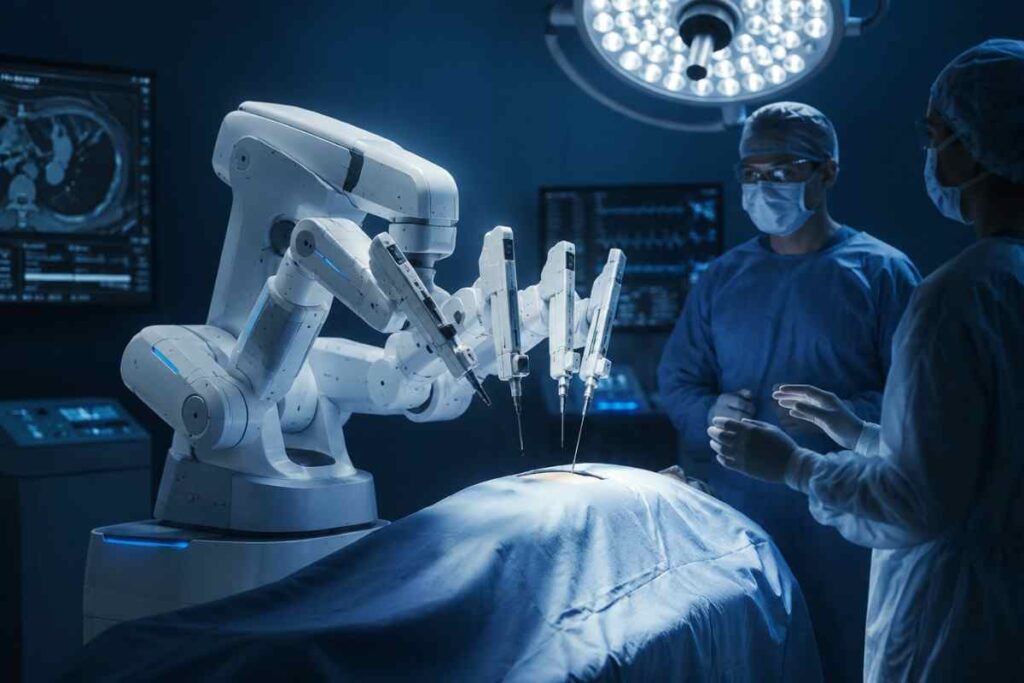
Under general anaesthesia, the robotic system is positioned near the operating table, and small incisions are made for the robotic arms.

The surgeon operates from a console, guiding the robotic arms while viewing a magnified, high-definition view of the surgical area.
The procedure is carried out — tumour removal, tissue reconstruction, or lymph node assessment, depending on the case.
Post-operative care and recovery follow, coordinated with the surgical team.
Depending on the specific procedure and patient, robotic-assisted surgery may offer certain advantages, such as enhanced visualisation of the surgical area, more precise instrument control in confined spaces, and, in selected cases, smaller incisions than open surgery. These potential benefits vary by procedure and patient, and are not guaranteed in every case — your surgeon can explain what is realistic for your specific situation.
Open surgery uses a single, larger incision to access the surgical area directly, and remains appropriate for certain complex or extensive procedures.
Laparoscopic surgery uses small incisions and long, surgeon-held instruments guided by a camera.
Robotic-assisted surgery also uses small incisions, but the instruments are controlled through a robotic system that translates the surgeon's movements with additional precision and range of motion in some settings.
None of these three approaches is universally better than the others — the appropriate choice depends on the cancer type, its location and stage, the patient's anatomy and health, and the surgeon's clinical judgement.
Robotic-assisted techniques may be considered for selected cancer procedures where the anatomy and surgical goals make them suitable. Dr. Nishanth Sanghavi has particular, verified experience in robotic-assisted head & neck oncology surgery, including robotic neck dissection procedures.
For other cancer types, whether a robotic approach is appropriate is assessed individually, based on clinical evaluation rather than assumed in advance.
Dr. Nishanth Sanghavi is a surgical oncologist based in Ahmedabad, trained at the Gujarat Cancer & Research Institute (GCRI) with a fellowship in advanced laparoscopic oncosurgery from Galaxy Care Institute, Pune.
. He is the founder and consultant surgical oncologist at Zanish Cancer Hospital, Naranpura, Ahmedabad.
His robotic experience is particularly established in head & neck oncology surgery.
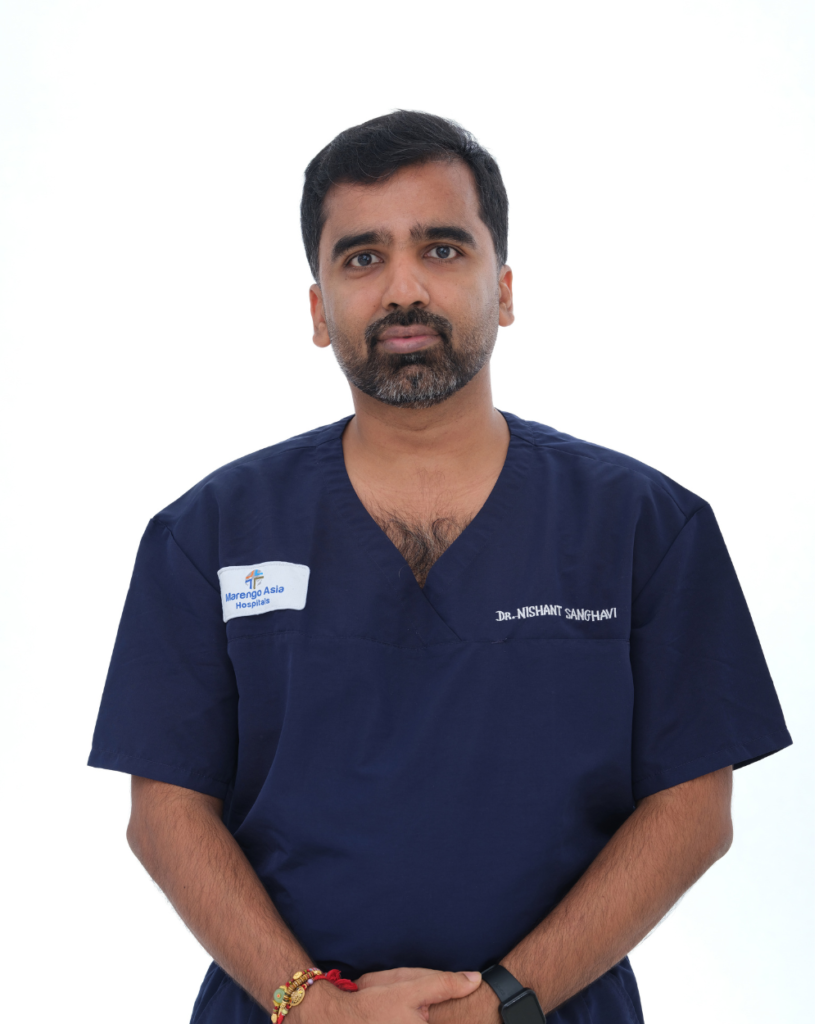
Surgical Oncologist
A cancer diagnosis alone doesn’t determine whether robotic surgery is suitable — that depends on several factors specific to your case, including the type and stage of cancer, its exact location, your anatomy, any previous surgery or treatment, and your general health.
Only a detailed consultation and clinical assessment can determine whether a robotic approach is appropriate for you; this page is intended to help you understand the option, not to substitute for that assessment.
A minimally invasive surgical technique where the surgeon operates using a robotic system for greater precision and visualisation in certain procedures.
No. The surgeon controls every movement from the console throughout the procedure; the system does not act independently.
No. Suitability depends on the cancer type, stage, location and a detailed individual assessment.
Enhanced visualisation and precision in selected procedures, and potentially smaller incisions — benefits vary by case and are not guaranteed.
Both use small incisions, but robotic surgery uses a surgeon-controlled robotic system, which may offer additional precision and range of motion in certain procedures.
Yes, with particular, verified experience in robotic-assisted head & neck oncology surgery at Zanish Cancer Hospital, Ahmedabad.
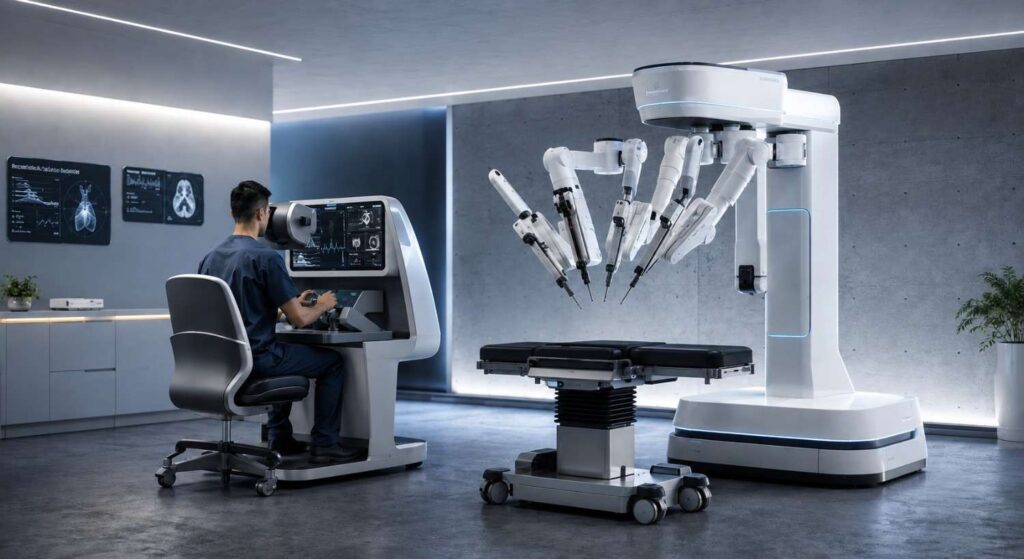
If you’d like to understand whether a robotic-assisted approach may be appropriate for your diagnosis, a consultation with Dr. Nishanth Sanghavi can help you review your specific case and options.
Lorem ipsum dolor sit amet, consectetur adipiscing elit. Quisque pharetra condimentum.
Copyright © 2026 Zanish Cancer Hospital